

The purpose of air humidity regulation in Greenhouse is generally to reduce the relative humidity of indoor air and decrease condensation on crop leaves.
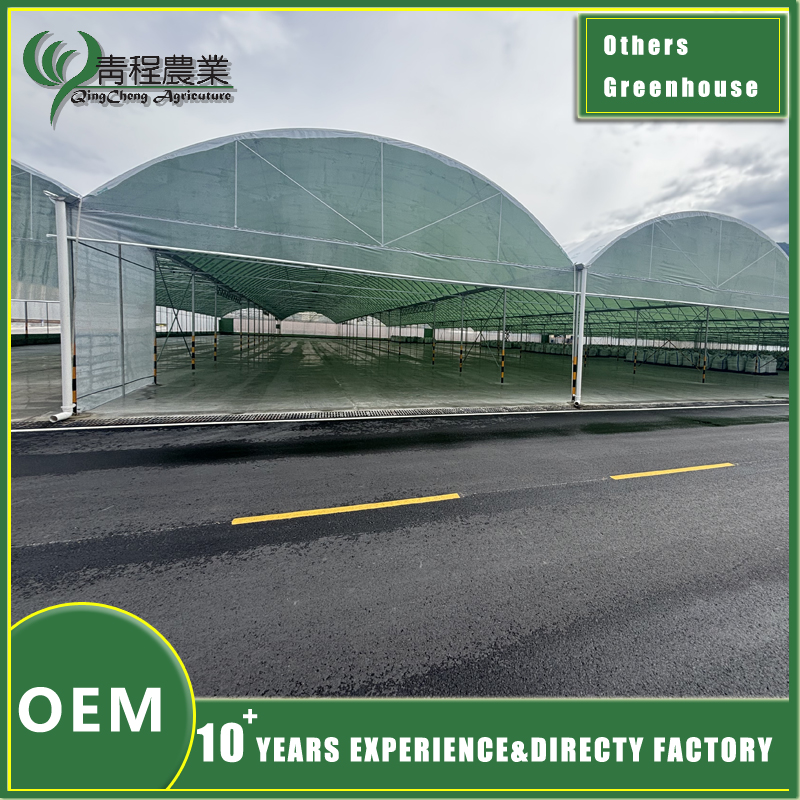
(1) Ventilation
Ventilation is a simple and effective method for regulating the humidity environment inside an Commercial Greenhouse. The humidity inside an Commercial Greenhouse is generally higher than outdoors; introducing relatively lower humidity air through ventilation can dilute the indoor air.
(2) Heating
Given a fixed indoor air humidity level, increasing the temperature of the Commercial Greenhouse through heating can naturally reduce the relative humidity of the indoor air. Combining ventilation and heating is particularly effective in reducing indoor relative humidity.
(3) Improving Irrigation Methods
Using water-saving irrigation measures such as drip irrigation and micro-sprinkler irrigation in Greenhouse can reduce water accumulation on the ground, significantly reducing ground evaporation and thus lowering relative humidity. Similarly, using mulch film can also reduce ground water vapor evaporation: for example, after covering a greenhouse with mulch film, the relative humidity of the greenhouse air decreases from 95%-100% to 75%-80%. (4) Moisture Absorption
Using moisture-absorbing materials such as lithium oxide to absorb moisture from the air can reduce the moisture content of the air, thereby lowering the relative humidity.
In some cases, Greenhouse require humidification to meet the growth requirements of crops, such as newly propagated cuttings and newly grafted seedlings, which require a high-humidity environment.
Greenhouse using hot air heating systems in winter also require humidification due to excessively low relative humidity.
A common humidification method is fine mist humidification. Its basic principle is that under high pressure, water is atomized into small-diameter mist particles that float in the air and evaporate rapidly, thereby increasing air humidity.