

According to experimental observations, the light and temperature distribution within an Glass Greenhouse is uneven. The central part of the greenhouse has strong light and high air and ground temperatures, while the front and rear parts have weak light and low air and ground temperatures, resulting in lower vegetable yields. Hanging a reflective curtain (a type of aluminized polyester film with high reflectivity) at the rear of the greenhouse can alter the light distribution, increasing the light intensity in the weaker rear areas and making the light and temperature distribution more uniform. This can generally increase vegetable yields by 10%-20%.
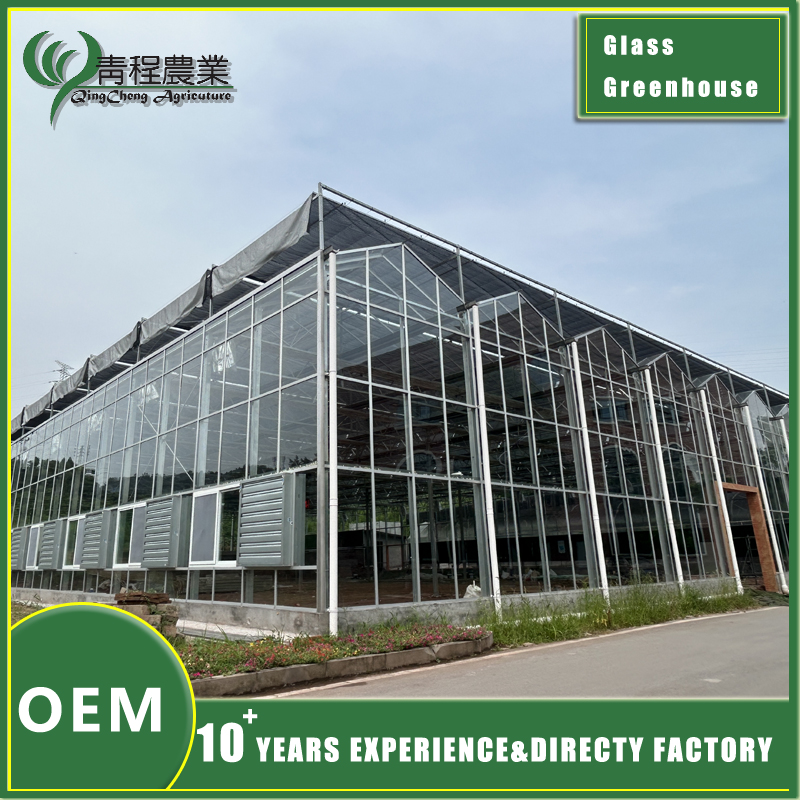
To reduce breakage rates and ensure the lifespan and proper functioning of the glass during use, appropriate maintenance and care should be performed throughout the construction process and after installation.
1. Storage and Maintenance Before Construction
The glass should be stored in a dry, sheltered place, away from water and direct sunlight. It should be placed upright on wooden or rubber-padded shelves whenever possible. 1. When stacking glass panes, place a layer of paper between them to prevent them from sticking together during subsequent handling. Water must absolutely not be allowed to enter between the glass panes, as the water film between them hardly evaporates and will absorb the alkaline components of the glass.
2. Precautions during construction: Before handling the glass, ensure that the edges are free of cracks and easily breakable marks. During construction, avoid letting the glass come into contact with hard objects, and do not place hard objects under the glass; use wooden blocks or rubber mats instead. If a portion of the glass is not installed within a day, write or stick stickers on the installed glass to prevent accidental impacts.
3. Cleaning and maintenance during use: Most greenhouses are used for the production of flowers and vegetables. In an uncontaminated environment, the glass allows light to pass through, creating a suitable environment for plant growth and development. However, over time, the glass surface will be continuously contaminated by smoke, dust, and other pollutants, causing a decline in the glass's light transmittance and affecting the greenhouse's usability. Therefore, in greenhouse production and use projects, the glass covering surface should be cleaned in a timely manner according to the degree of pollution to ensure normal lighting and normal growth of plants.